



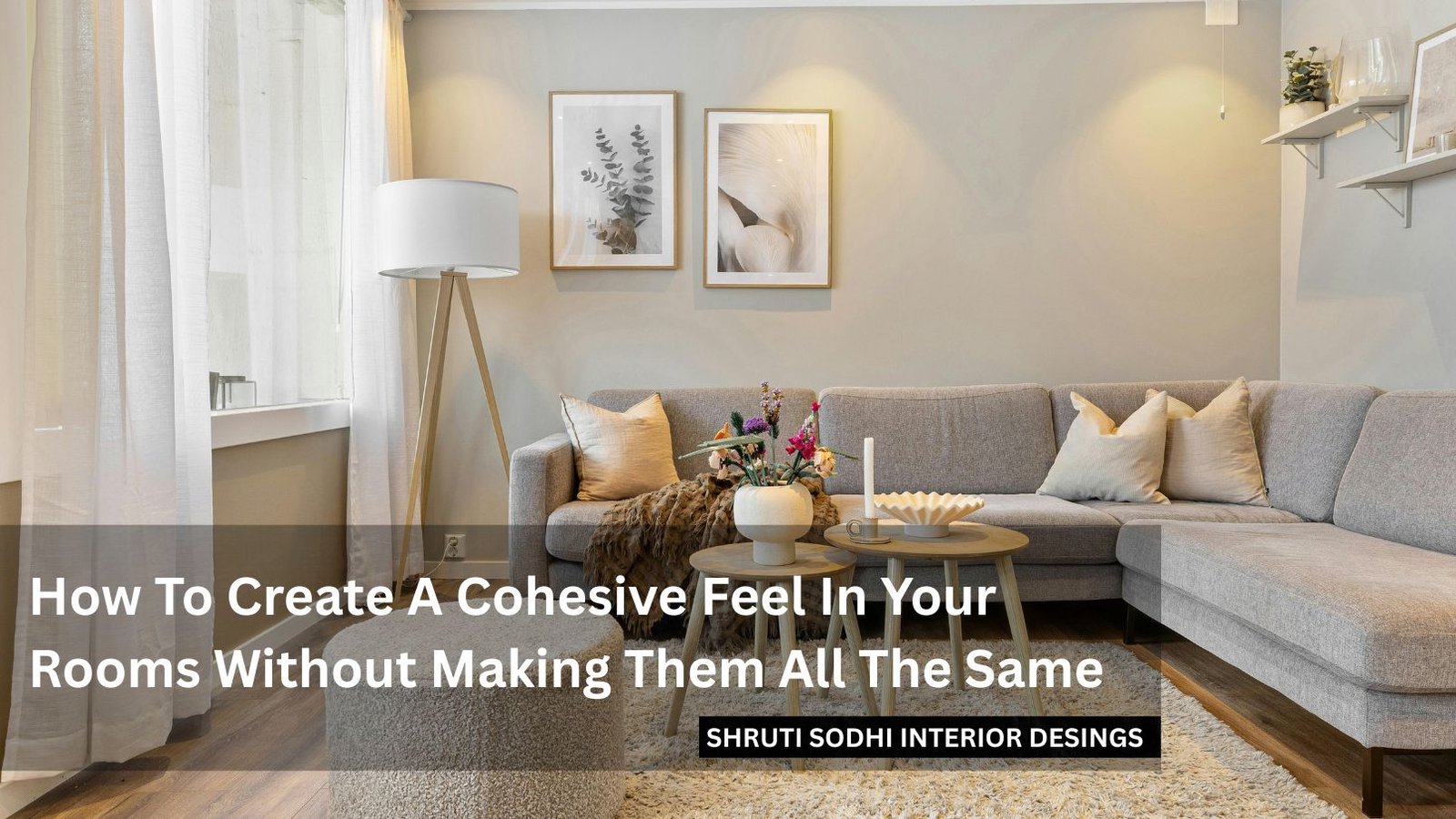
How To Create A Cohesive Feel In Your Rooms Without Making Them All The Same
When you walk around a well-designed house, it should feel natural and easy. However, creating a sense of flow between rooms can be one of the hardest aspects of designing a house. Many homeowners worry that by trying to ensure their rooms match, they’ll end up with a very generic looking home. Whereas when you don’t pay attention to each room individually, you can end up with a very cluttered look.
Creating a cohesive flow in your home does not require you to have duplicate furniture and paint all your walls the same shade of beige! By using a few key design elements, your rooms will feel cohesive. Whether you’re designing a brand new build, doing renovations, or redesigning your home room by room, you can easily create a sense of flow between your rooms by creating a good balance of a cohesive yet unique design.
What Does A Cohesive Feel Mean?
Creating a cohesive feel between your rooms means that they follow a style. You can think of your home like a song; whilst the tune changes from room to room, the rhythm remains the same. To create a visual flow between rooms, you’ll want to use 3-4 key themes throughout your home. This could be a base Colour, a metal finish, and a consistent design element.
Start With a Colour Scheme
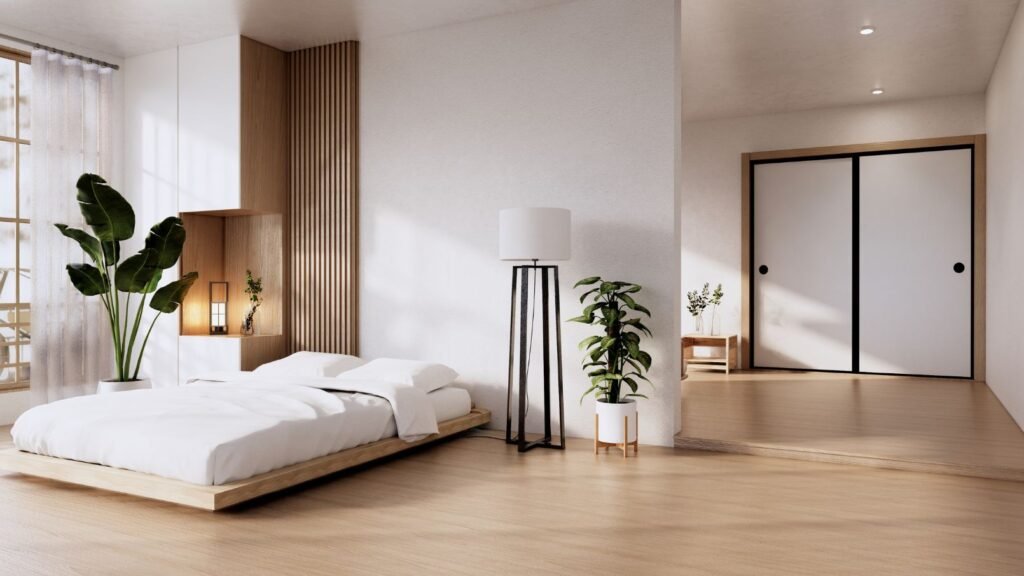
Most people will notice the Colours in your room first. To achieve cohesive whole-home interior design, you don’t need to stick to 2 Colours. Instead, aim to create a scheme with one base neutral Colour, one or two complementary Colours, and a few accent Colours.
From your base neutral Colour (warm chalk white, soft greige, oatmeal, or muted taupe), you can create a flow between your rooms by varying the amount and intensity of your complementary and accent Colours:
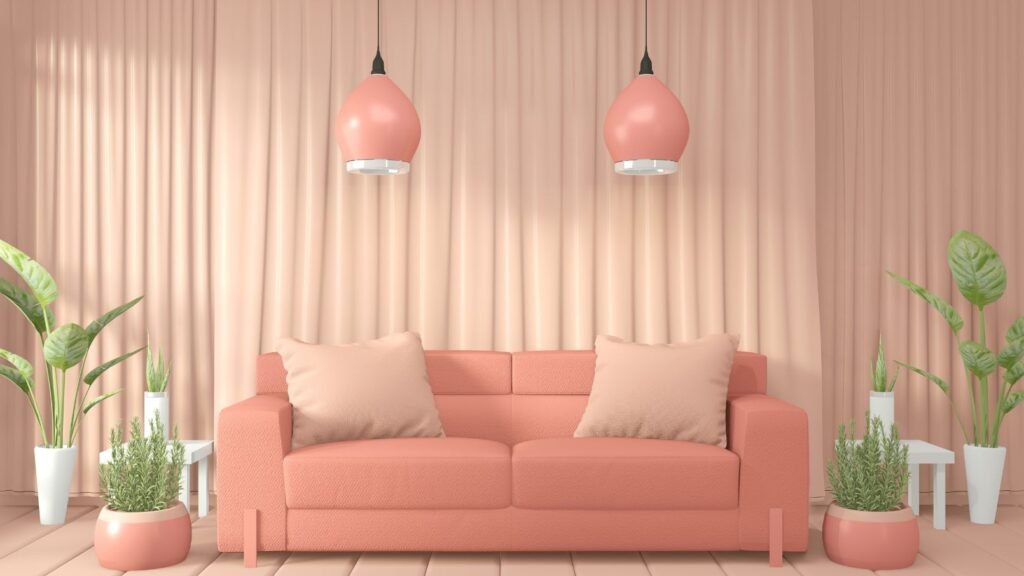
- Living Room—Keep your walls the same warm base Colour. Add some deep olive green by having it in your drapes or accent chair. Terracotta cushions and ceramics will add some nice pops.
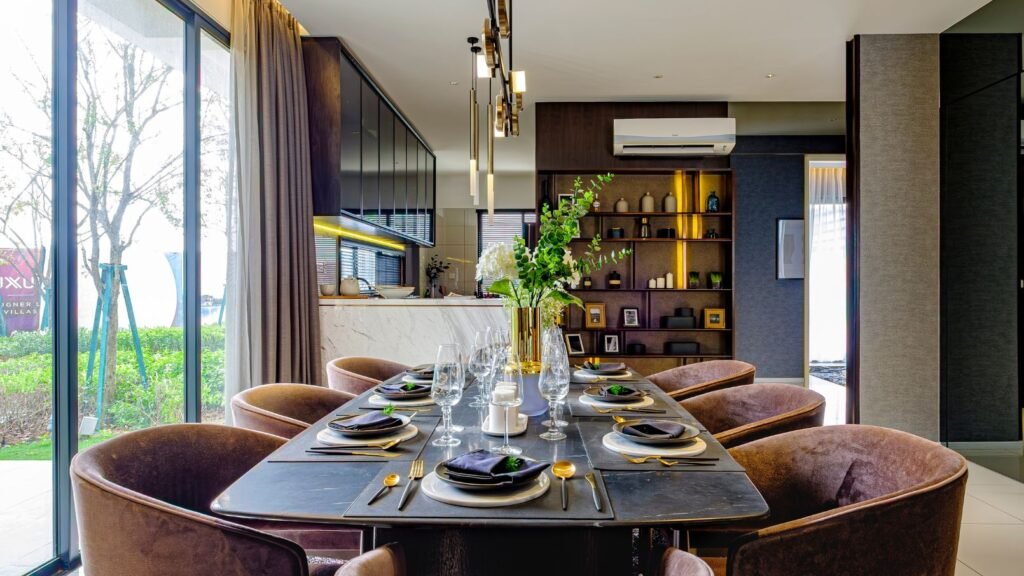
- Dining Room – Adjust the ratio of your colours to create a cosy feel. Use the olive green on your panelled walls and keep your dining chairs neutral.
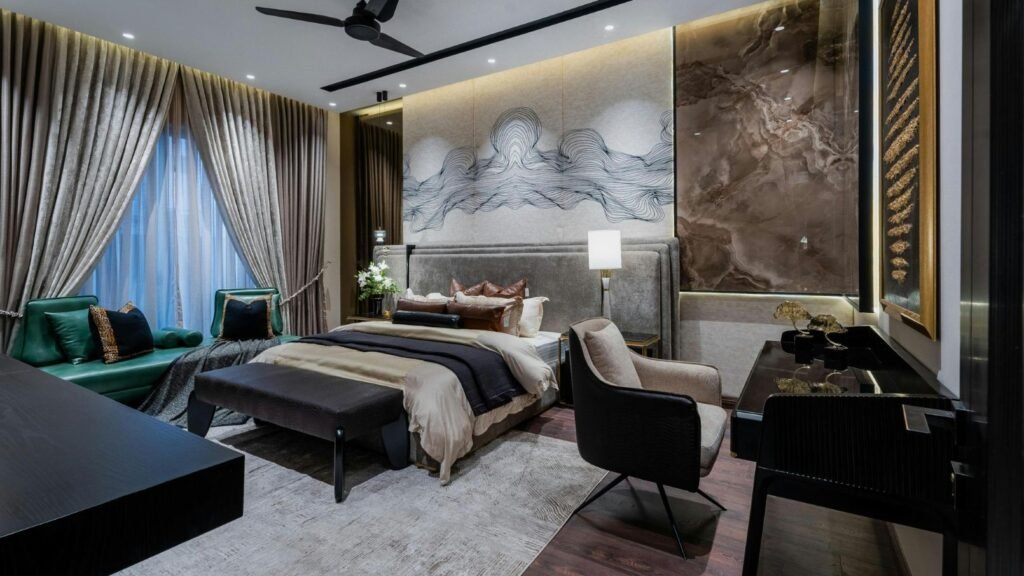
- Bedroom—Reduce the high contrast and keep to your base Colour and softer, muted tones of your complementary Colour.
Try testing the paint swatches and fabrics in each room throughout the day as the natural light will vary depending on the orientation. Having a clear design theme will make it easier to choose your Colours. Try looking at different interior design styles to help you decide what feels personal to your home.
Repeat Materials But Vary Their Application
The materials you use will help to create the right feel. To create a cohesive feel between your rooms—especially when planning room-by-room interior design—choose a few key materials to use throughout your home. Be careful not to overdo it. Choose 2-3 key finishes.
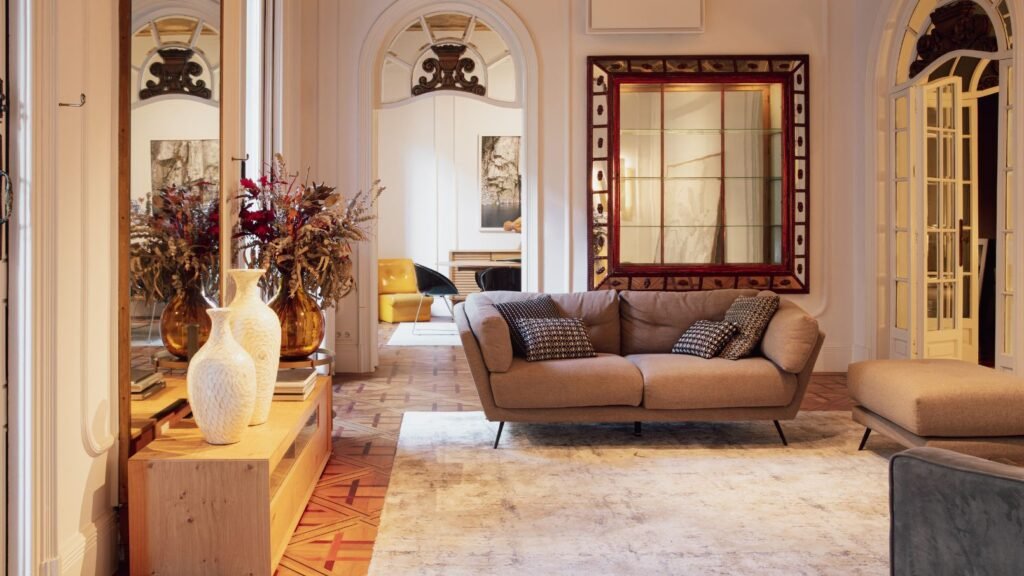
For example, if you’ve chosen to use warm white oak, brushed brass, and honed travertine as your key materials, you can create a cohesive feel between your rooms by varying the size and use of each material. Your living room might have wide-plank white oak flooring and a coffee table. You can add some brushed brass with your floor lamps and frames. Your kitchen doesn’t have to have the same oak cabinetry; instead, you can have painted cabinetry with oak counter stools, travertine splashback, and brushed brass handles. You can add a thin oak console in your hallway with a travertine tray.
By varying the surface finishes and sizes between your rooms, you’ll create an interesting feel, but your home will still feel cohesive. Choosing the right materials will affect how your rooms feel in relation to each other. Consider how each room will be used and your overall colour scheme when choosing materials for a luxury home interior.
Avoid Using Matching 3-Piece Furniture Sets
One of the easiest ways to create a flat home is by using matching 3-piece furniture. Most cohesive homes will not have matching furniture; instead, your rooms will follow a cohesive design. This can be done by using similar proportions, shapes, lines and details.
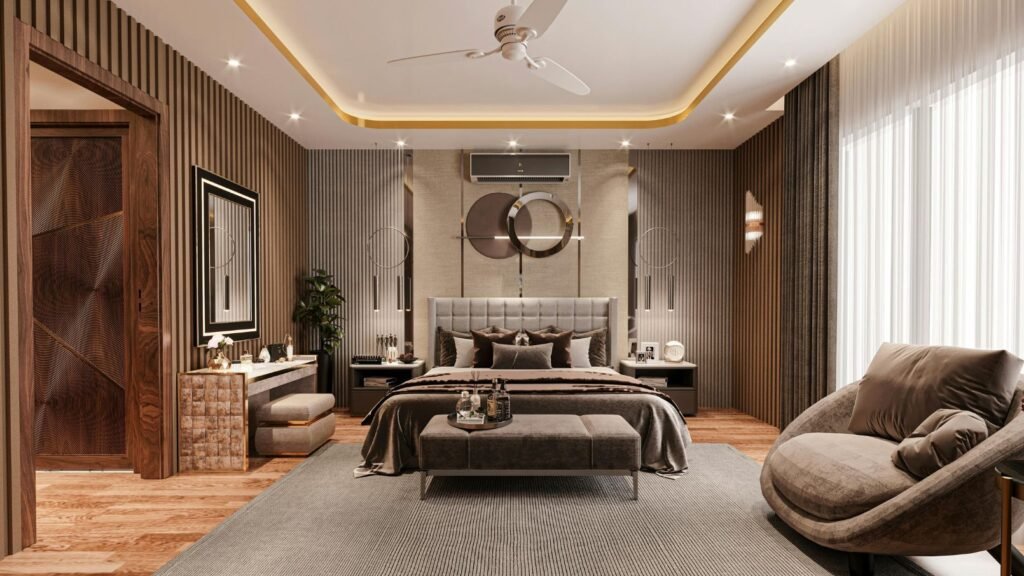
Look at the key shapes in your furniture. If you have low-profile furniture with soft curves and slim legs in your living room, you can carry this through to your dining room. Even if you have a dark dining table and a textured sofa, they will still feel cohesive, as they have the same soft curves. You can also add some subtle details. For example, if you have a fluted headboard in your bedroom, you can have the same vertical fluting in your media unit in your living room. Or keep your shelves and side tables clean with straight lines.
Choosing your lighting will also create a cohesive feel. By thinking about your lighting design for different rooms, you’ll ensure the Colour temperature stays the same. Usually you’ll want to keep your colour temperature warm (around 2700K-3000K) to create a comfortable feel in your home. Whilst your lighting should vary depending on the room (dining pendant, kitchen task lighting, and bedside sconce), choosing a similar metal will create a cohesive feel.
Choose custom items to help create a cohesive feel whilst still considering the unique needs of each room. Adding bespoke furniture for a personal home can help bring this together.
Ensure Each Room Has A Unique Feel
Whilst you want your home to feel cohesive, you don’t want it to lack personality. Once you’ve decided on your basic Colour scheme, key materials, and warm lighting, you can add some personality to each room. Just ensure you have one or two key elements to keep things cohesive:
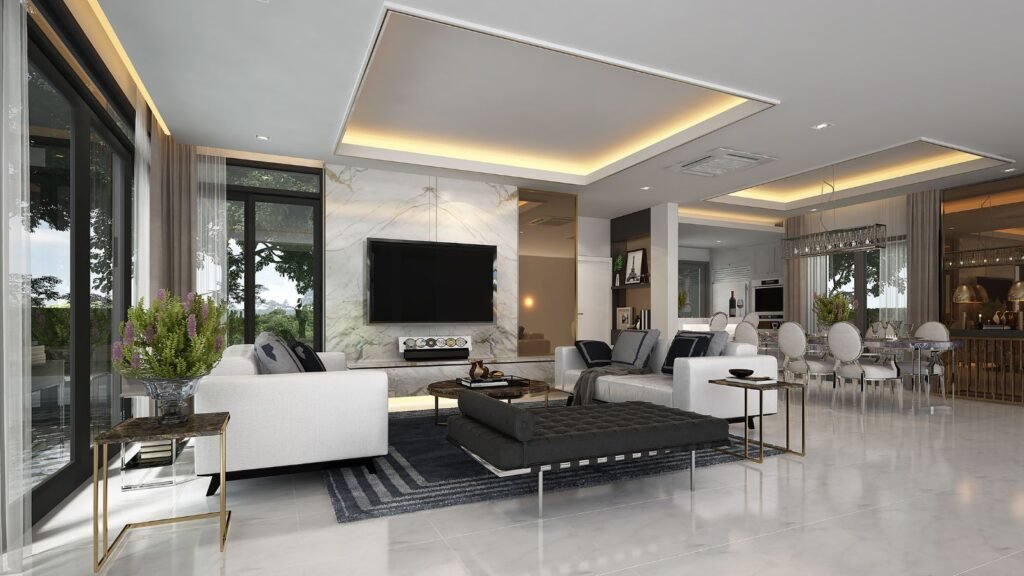
- Living Room – As this is a social room, you can add more contrast, layered rugs, and statement art. However, keep your key seating in your base Colour.
- Dining Room – As this is for evenings, you can add darker tones to your walls, interesting lighting, and textured wall coverings. However, keep your wood tones or metals the same as your living room.
- Bedroom—As this is a private room, you can add acoustic-friendly and calming elements. Use plush curtains and upholstered headboards with soft tones from your complementary Colour.
- Kitchen—This should be hard-wearing and easy to clean. Ensure your quartz worktops and sleek cabinetry still tie in with your living areas by having the same hardware, warm task lighting, and subtle wood elements.
Use Your Floor, Doors & Transitions To Create A Flow
Your home’s interior structure will create a flow between your rooms. If you keep the same flooring, doors, skirting, and transitions, then you’ll have much more freedom with your furniture.
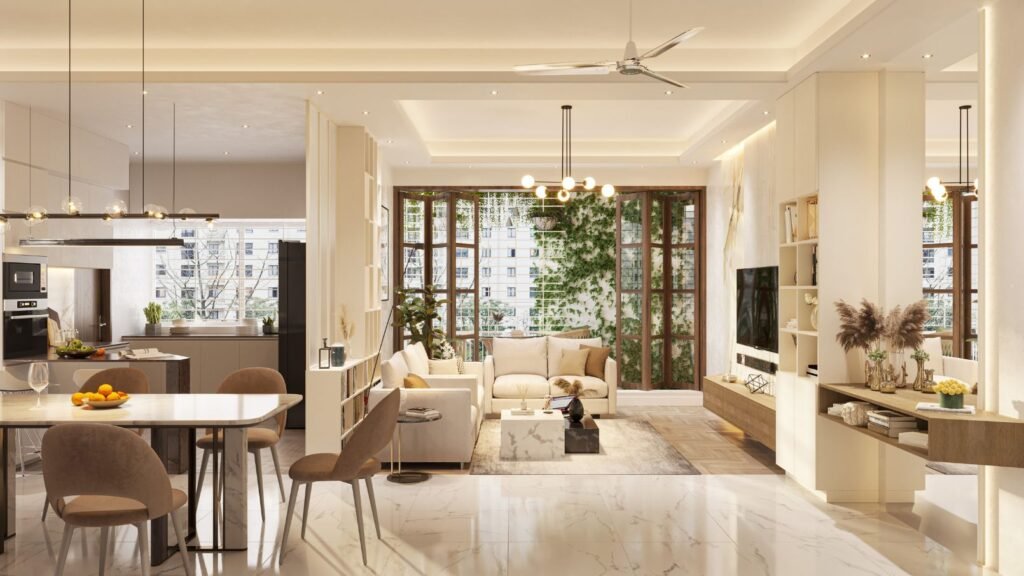
Having your flooring run through your key living areas, dining room, and hallways will create a large, calming feel. However, kitchens and bathrooms will require hard-wearing materials due to moisture, heavy footfall, and spillages. Use porcelain tiles or sealed stone. If you’re changing your flooring at your door, use a flush metal or stone transition underneath your closed door leaf. Choose a tile Colour that complements your wood.
Using the same doors and hardware will help to create a cohesive feel. Investing in consistent doors, solid handles, and quality architectural flooring will give your home a polished feel that will last. This will save you money on decor or soft furnishings.
How To Create A Cohesive Feel Between Your Open Plan Living & Dining Room
Open plan rooms can be tricky. Without walls, your living and dining areas can feel like one big area. However, you can create a cohesive feel.
The best way to create a cohesive yet defined area is using area rugs. Place your living room furniture on a large rug. This will help to define your living area. Even if you have the same flooring throughout your home, this will help to divide your dining area. Float your living room sofa with the back facing your dining room or add a low console to the back. This will create a subtle division.
Add some ceiling lighting to help define your areas. Hang a straight pendant or chandelier above your dining table. This will help to create a cohesive feel whilst also defining your eating area. Add floor lamps to your living room to create a softer feel. As you can see in both areas, try to keep the same finishes. For example, if your living room side tables have a black metal frame, your dining chairs can have the same.
Create A Cohesive Home With This Quick Checklist
Before finalizing your finishes and furniture, use this checklist to ensure your rooms are cohesive:
- Have a base Colour scheme—Is there a base Colour or undertone in your Colour scheme?
- Have 2-3 key finishes—Are there 2+ key woods, stones, and/or metals?
- Have consistent warm lighting – Are your bulbs and built-in LEDs warm?
- Have consistent shapes & details – Are there consistent shapes, skirting, and/or hardware?
- Have a unique feature – Have you added a unique texture, intense Colour, or statement item?
- Are they suitable for use? – Are your materials suitable for everyday use, easy to maintain, acoustic-friendly, private, and within your budget?
- Check your sightlines – Are the Colours and materials balanced when looking through your open doorway?
What To Repeat & What To Vary
Use this list to help you decide what to keep consistent throughout your home and what to vary:
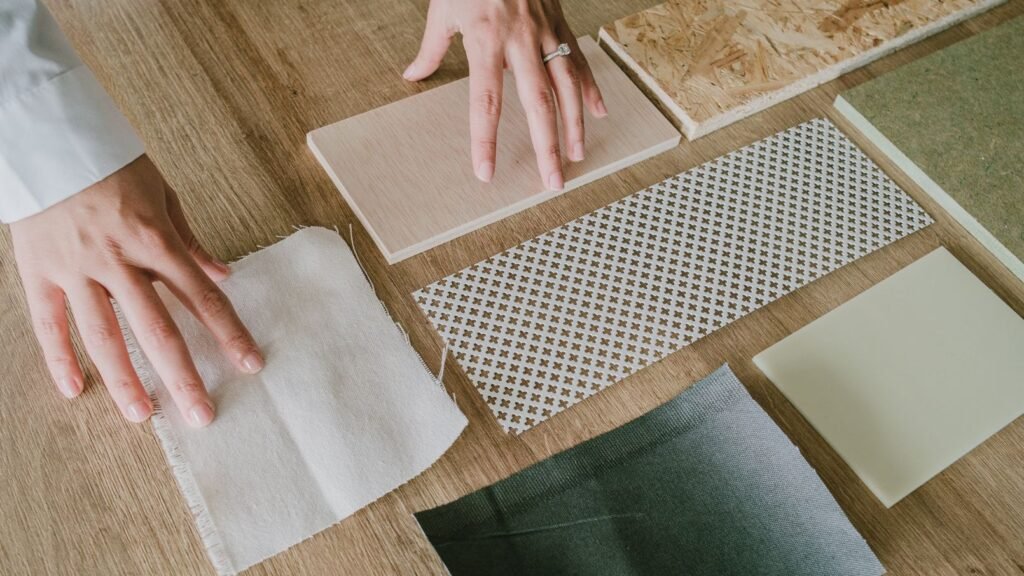
- Colours – Use your base Colour and a few complementary Colours throughout your home. Vary the intensity and amount of your accent Colours.
- Materials – Use 2-3 key materials throughout your home. Vary the amount of materials.
- Lighting – Keep your lighting warm and consistent. Vary your lighting.
- Shapes & Details – Use consistent curves, lines, skirting, and/or hardware. Vary your furniture.
- Textures & Art – Keep your textures in a similar family. Vary your patterns and art, and add a unique feel.
- Function – Keep your design consistent. Let your materials be durable, private, store well, easy to maintain, and within your budget.
How Shruti Sodhi Interior Designs Helps in Creating a Cohesive & Personal Home
To create a cohesive feel throughout your home, you’ll need to take a step back from looking at your individual room boards. Working with experienced interior designers in South Delhi will help you to create a cohesive yet unique home.
At Shruti Sodhi Interior Designs we start by creating a cohesive theme throughout your home. We will ensure your materials and finishes are consistent and create detailed plans for your home. By mapping out how your wood tones, stone, hardware, and lighting will work together in your living areas, kitchen, hallways, and bedrooms, we can avoid expensive mistakes. We can ensure your budget is kept within your key areas whilst giving each room a unique feel. By using our residential interior design services, we can help you to create a cohesive home. We can ensure your layouts, finishes, furniture, and lighting all complement each other. View our residential interior design projects to see how we can create a cohesive home with unique areas.
Final Thoughts
There is no strict rule to create a cohesive home. Repeating a few intentional elements such as a base Colour scheme, 2-3 key materials, consistent door details, and warm lighting will give your home a calm, cohesive feel. Let your rooms be defined by their function, budget, and personal touch.
FAQs
How can I create a cohesive feel in my home without making the rooms all the same?
Repeat 3-4 intentional elements throughout your home. This can include base Colour, wood tone, metal, and warm lighting. Vary your accent Colours, furniture shapes, and textures to suit the function of each room organize.
Should all the rooms in my home be the same Colour?
No. You can use different Colours in each room but keep the undertones consistent. Varying the amount of Colour in each room will create a cohesive feel.
How many Colours should I use throughout my home?
There isn’t a strict rule, as natural light will vary and your layouts will vary. Start with one base Colour, one or two complementary Colours, and two or three accent Colours. Vary the amount of Colour in each room.
Can I mix different interior design styles in one home?
Yes, as long as there is a theme running through your home. This could include having the same Colour scheme, consistent sizing, and materials. If there isn’t anything tying your rooms together, it can look like your home is broken up.
Do flooring and wall finishes need to match in every room?
Not necessarily. However, having consistent tones will create a cohesive feel. If you’re using the same flooring in your key areas, this will help. However, consider what you need in your kitchens, bathrooms, and bedrooms. They will need to be moisture-resistant, acoustically friendly, and easy to maintain.
For professional, tailored interior design solutions that bring your vision to life, contact-us today and let’s create the space you’ve always dreamed of!